 stickrep
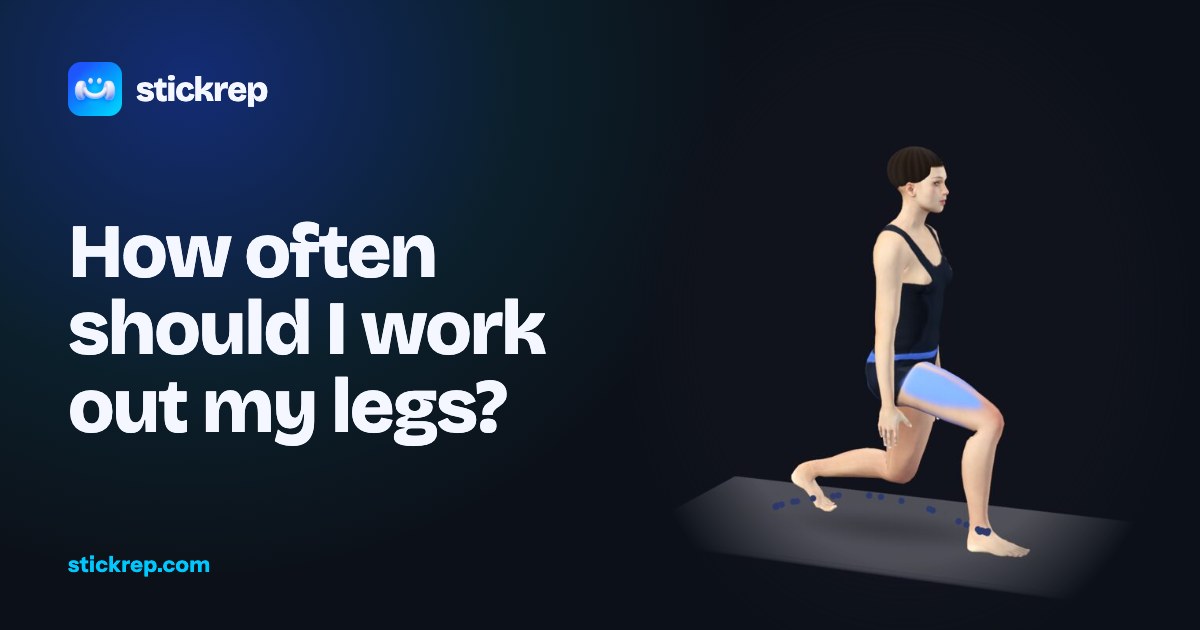
How often should I work out my legs?
How many leg workouts should you do a week?
Work out your legs twice a week to start. Leave at least 48 hours between hard sessions for the same muscles, so Monday and Thursday work well. The leg exercises in two full-body workouts count, too. If you’re new to strength training, start with one set of each exercise and see how you feel before adding more. ACSM resistance training update · ACSM exercise prescription recommendations
-
Put leg training on two days you can usually keep.
Pick Monday and Thursday, Tuesday and Friday, or whichever pair fits an ordinary week; if you train on Monday evening and Wednesday morning, there’s a day between the dates but less than 48 hours between the workouts. If Thursday falls through, move the workout to Friday or Saturday and check the gap before the next hard leg session. If the week only has room for one workout, do that one and go back to your usual schedule when you can. If you’re starting to work out at home, choosing a time you can repeat is a good first decision. ACSM exercise prescription recommendations
What should a beginner do on leg day?
Repeat the same short routine on both days so you can compare how the movements feel. Start with five minutes of easy walking or marching, then do one set of 10 controlled reps per move, with two minutes of rest between moves. That’s a sample starting dose based on ACSM guidance. Use the easier versions below if needed and end a set early if you can’t keep the movement steady. ACSM exercise prescription recommendations
The last few reps can feel like work. Finish while you could still manage another controlled rep. Once the routine feels manageable on both days, try adding a few reps to one move while leaving the rest of the session as it is. If you already have weights and want to build from there, see how to build muscle at home with dumbbells. ACSM resistance training update · ACSM exercise prescription recommendations
-
Use a chair sit-to-stand to practise getting up under control.
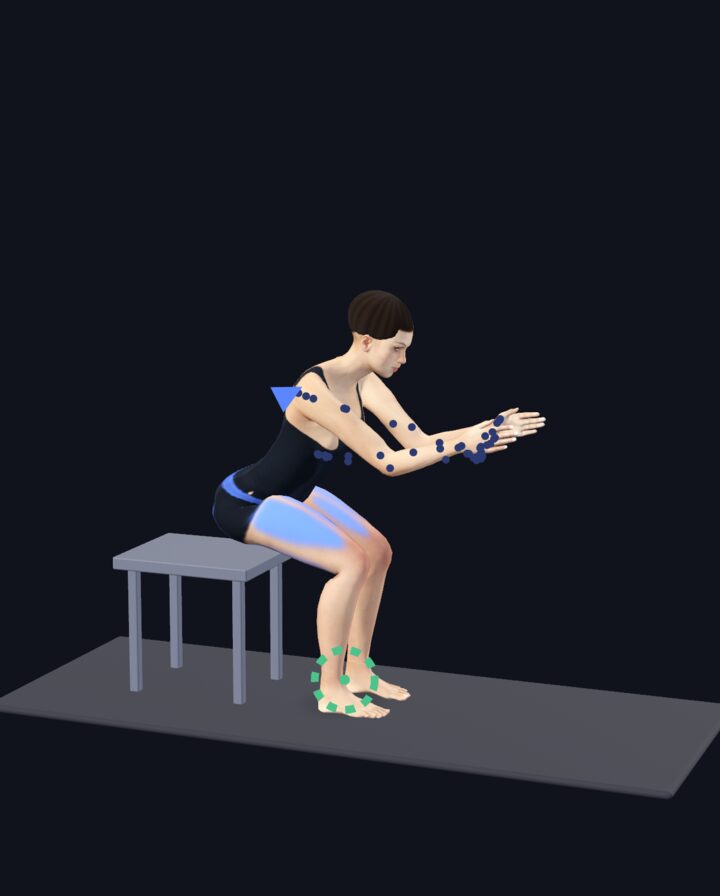
Chair sit-to-stand Sit near the front of a sturdy chair with your feet flat and about hip-width apart. Lean slightly forward, stand all the way up, then lower yourself until you’re sitting again. Give the lowering part enough time that you can touch down quietly, even on the last rep. For an easier set, use light hand support against your thighs or start with the NHS’s five-rep version. NHS strength exercises
-
Add a glute bridge to work your hips from the floor.
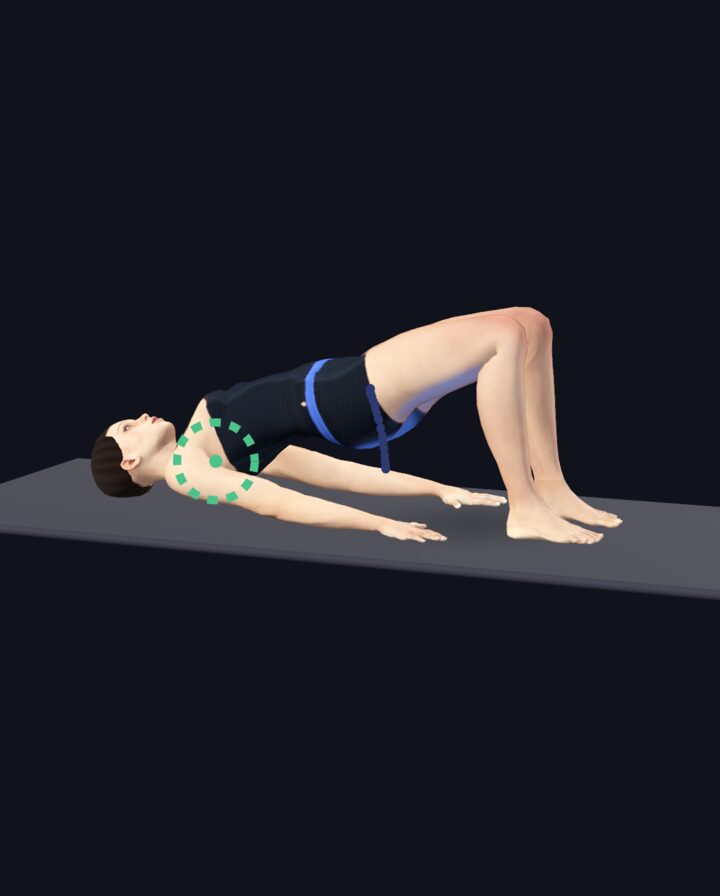
Glute bridge Lie on your back with your knees bent, feet flat and arms resting by your sides. Press through your feet and squeeze your glutes to lift your hips, stopping before your lower back starts to arch. Lower your hips slowly to the floor between reps so you can reset your feet and start each lift from the same spot. For an easier set, keep the lift small and stay within a range you can control. Royal National Orthopaedic Hospital exercise guide
-
Finish with supported calf raises for your lower legs.
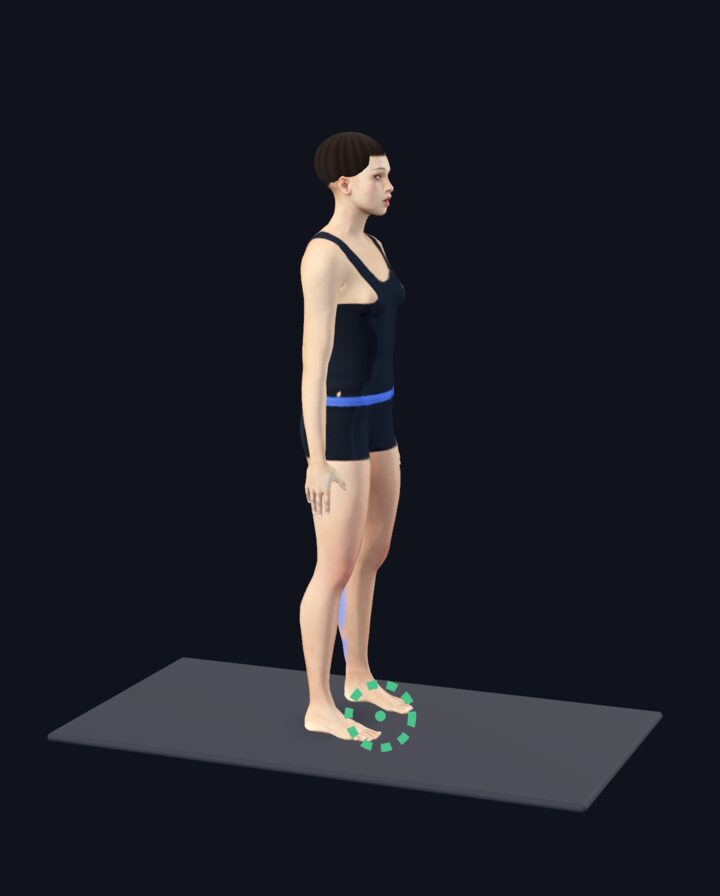
Calf raise Stand on a flat floor with both feet planted and rest your hands on a stable chair or counter. Slowly lift both heels as high as feels comfortable, then lower them until they touch the floor. Keep your hands in place for balance so you can concentrate on making the rise and fall equally steady. For an easier set, lift your heels a little less or use the NHS’s five-rep starting point. NHS strength exercises
Should I work out every day?
-
Give hard leg work its own place in the week.
You can move every day and still give your legs time between hard strength sessions. After a Monday leg workout, Tuesday could be a comfortable walk, an upper-body session or a day off, depending on what you feel up to. If your Tuesday full-body workout includes challenging squats or lunges, count that as leg training when you look at the week. If you want a third strength day for your legs, try Monday, Wednesday and Friday at roughly the same time, and spread your existing sets across those sessions before you add more work. ACSM exercise prescription recommendations · Is it OK to work out every day?
Should I work out while sore?
-
Let soreness change the plan when it changes how you move.
If your legs feel mildly stiff after an unfamiliar workout and you’re moving comfortably, an easy walk is a reasonable option. If soreness makes you limp, rush the descent to the chair or shift your weight to one side, move the hard session to another day. Stop if an exercise causes pain, and speak to a doctor or physiotherapist if soreness persists or gets worse. If you’re coming back from an injury, check with a doctor or physiotherapist before starting the routine. ACSM guide to muscle soreness · Leicestershire Partnership NHS Trust guidance
The short version
- Start with two leg strength sessions a week, at least 48 hours apart. ACSM exercise prescription recommendations
- Try one set each of chair sit-to-stands, glute bridges and supported calf raises. ACSM exercise prescription recommendations
- Move the hard session if soreness changes how you move. Stop if an exercise hurts. ACSM guide to muscle soreness
This article is general information, not medical advice. If you have a health condition, an injury or are pregnant, check with a doctor before you start.
 How many push-ups a day is good?
 How to warm up corn tortillas so they fold
 How to Stay Motivated to Workout: Five Myths