 stickrep
Can you build muscle at home with dumbbells?
Can you build muscle at home with dumbbells?
Yes, you can build muscle at home with dumbbells, including the pair sitting beside your sofa. You need exercises that challenge the muscles, repeatable training and a way to increase the challenge as you improve. ACSM’s updated guidance supports home resistance training for muscle growth. The spare room qualifies. ACSM guidance
The useful question is whether your dumbbells provide enough resistance for each exercise. A weight that challenges your shoulders might barely trouble your legs. Keep a record of the exercise, weight and repetitions so you can spot when the work becomes easier.
How heavy should dumbbells be to build muscle?
Choose the weight by the exercise and your control, rather than a universal kilogram target. You should be able to lift and lower the dumbbells deliberately, without swinging them or cutting the movement short.
Lighter weights can support muscle growth. A systematic review found similar muscle growth across different loads when sets were taken to voluntary failure, although heavier loads produced greater strength gains. That finding does not mean casually lifting a light weight has the same effect as challenging training. Resistance training load review
You do not need to reach failure on every set. ACSM’s current guidance says training to failure did not consistently improve outcomes for the average healthy adult. Aim for challenging, controlled work rather than a final repetition that requires an argument with the furniture. ACSM guidance
For a beginner, start with manageable effort while learning the movements. Reduce the weight if your technique changes. Stop if an exercise causes pain. If you have an injury or health condition, are pregnant, or are returning after illness, check with a doctor or physiotherapist before starting.
What is a good home workout with dumbbells?
Use the following routine as a starting template. You need dumbbells, clear floor space and a stable chair without wheels for the easier squat option. The NHS recommends a chair that will not slip for chair-based exercises. NHS strength exercises
The worked example: perform the exercises below in order, completing one set of each. Start with 10 controlled repetitions per exercise, including 10 on each side for the row. Rest two minutes between exercises, taking longer if needed. Once the routine feels manageable, repeat the sequence for a second round.
Those are practical starting choices, rather than a uniquely effective formula. They adapt ACSM’s guidance on beginner resistance training, controlled repetitions and rest between sets. Use less weight or fewer repetitions whenever control becomes difficult. ACSM exercise prescription
Goblet squat
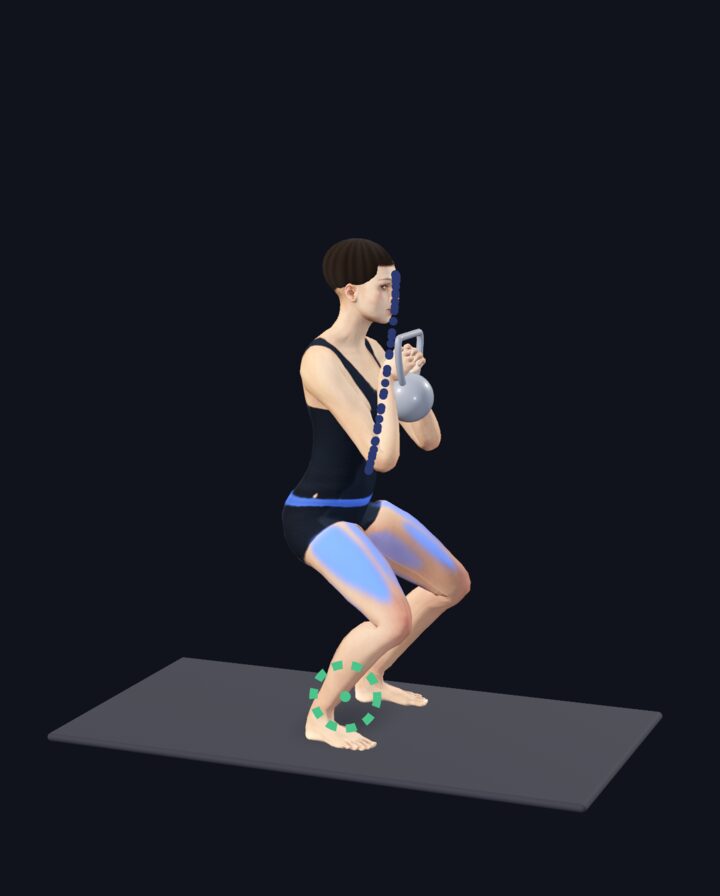
Hold a dumbbell close to your chest with both hands. Stand with your feet in a comfortable position. Bend your hips and knees, lowering only as far as you can control, then stand up. Keep the weight close rather than letting it pull you forwards.
Easier option: put the dumbbell down and practise sitting down onto a stable chair and standing back up. Use your hands for assistance if needed. The NHS includes the sit-to-stand as a home strength exercise. NHS strength exercises
Dumbbell floor press
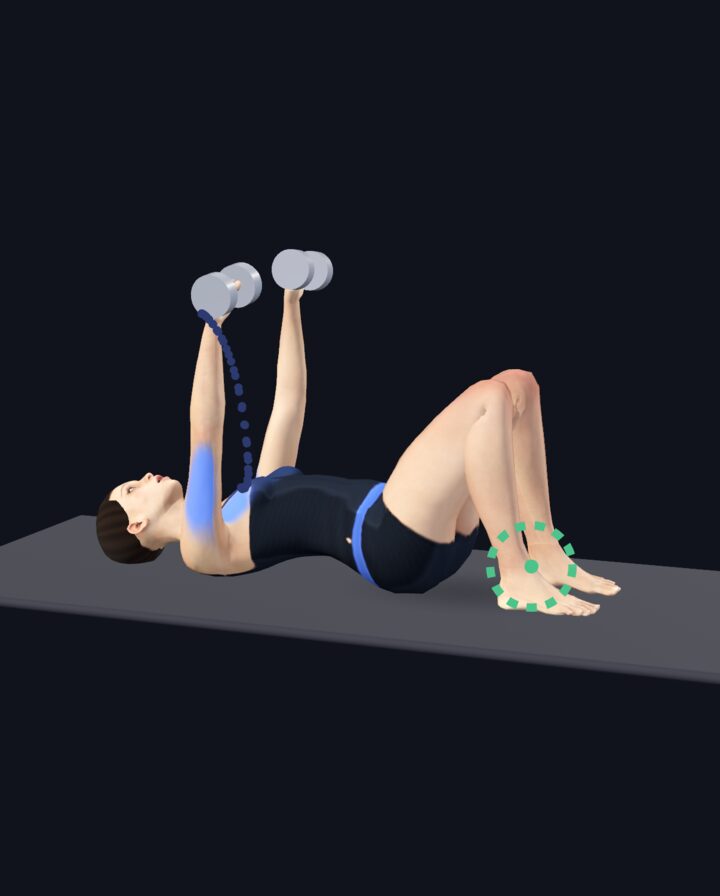
Sit down with the dumbbells beside you, then get into position carefully. Lie on your back with your knees bent and feet planted. Hold the weights above your chest. Lower until your upper arms gently meet the floor, then press upwards. Avoid bouncing your arms against the floor.
Easier option: use lighter dumbbells. If getting onto the floor is difficult, replace the floor press with a standing wall push-up, keeping the movement comfortable and controlled.
Dumbbell Romanian deadlift
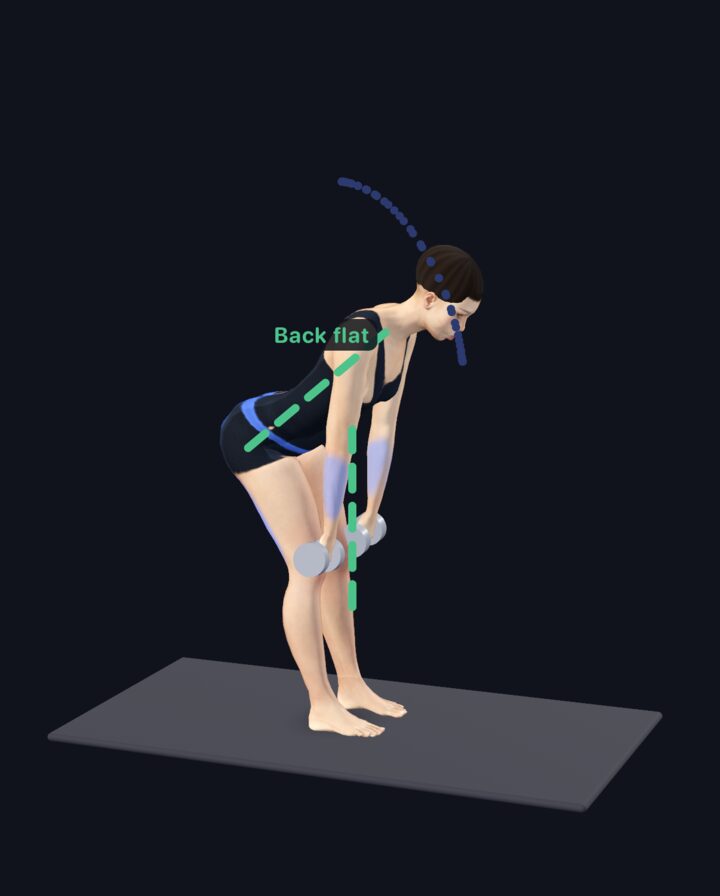
Stand holding the dumbbells in front of your thighs. Soften your knees and move your hips backwards, keeping the weights close to your legs. Lower only as far as you can while keeping your back position steady. Stand by bringing your hips forwards without leaning backwards at the top.
Easier option: set the weights aside and practise the hip movement facing away from a wall. Reach your hips back towards the wall, then stand. Use a small movement while you learn.
Single-arm row
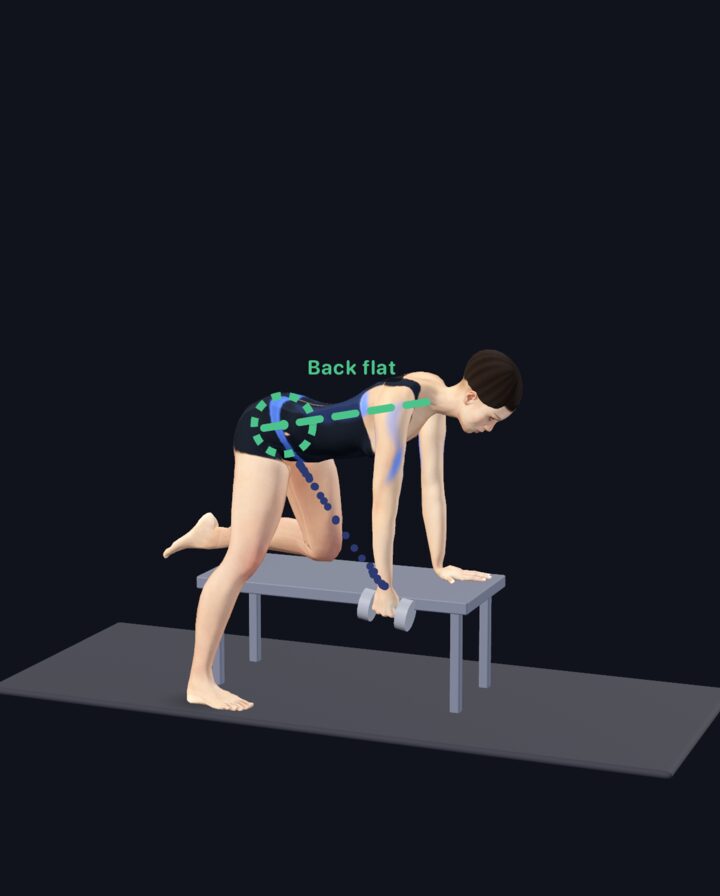
Take a staggered stance and support your free hand on a stable surface. Hold the dumbbell beneath your shoulder. Pull your elbow towards your hip, then lower the weight deliberately. Keep your torso steady rather than twisting to lift the dumbbell. Repeat on the other side.
Easier option: use a lighter weight and a more upright supported position. Choose a support that cannot tip or slide.
Shoulder press
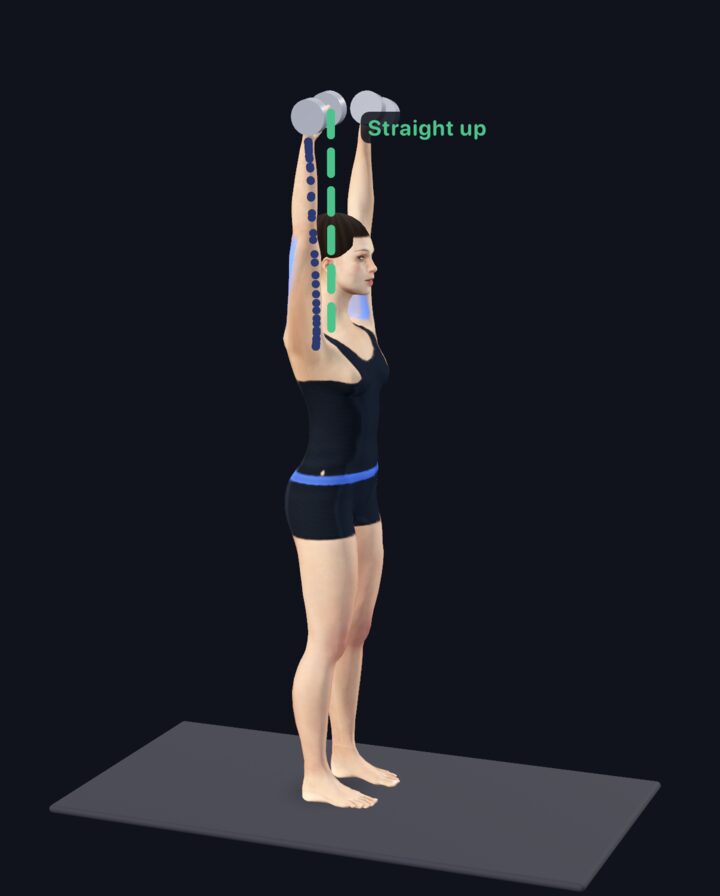
Hold the dumbbells around shoulder height with your wrists comfortably aligned over your forearms. Press upwards without leaning backwards, then lower with control. Keep breathing throughout the movement.
Easier option: use lighter weights or perform the press seated on a stable chair. Skip the movement if pressing overhead causes pain.
Before the routine, warm up with easy walking or marching, then rehearse the movements without weights. Afterwards, ease back into gentle movement rather than finishing abruptly. Warm-up and cool-down guidance comes from ACSM’s exercise prescription recommendations.
If setting up the space is the main obstacle, the beginner’s guide to working out at home covers getting started.
How often should you do strength training at home with dumbbells?
Begin with two sessions a week on non-consecutive days, such as Monday and Thursday. Repeat the same routine so you can practise the movements and compare your performance. ACSM recommends resistance exercise for the major muscle groups on two or three days each week. ACSM exercise prescription
A starting routine is a foundation, rather than the maximum amount of training you will ever need. ACSM’s current guidance identifies higher weekly volume, around 10 sets per muscle group, as a target for optimising muscle growth. Build towards more work gradually instead of making that your first assignment. ACSM guidance
Keep recovery days in your schedule. For planning the rest of the week, see whether it is OK to work out every day.
What if your dumbbells become too light?
Increase the challenge deliberately. Add controlled repetitions within your chosen range before increasing the weight. ACSM recommends increasing resistance when you can exceed the intended repetition target. ACSM progression guidance
For example, use 10–15 repetitions as your working range. If you can complete 15 with steady technique across your planned sets on repeated sessions, try the next manageable weight and return towards the lower end. This is a practical application of progression guidance, rather than a separate research-tested programme. ACSM exercise prescription
If your fixed dumbbells remain easy despite more repetitions, consider a harder exercise variation or heavier weights. Avoid making every session faster to create difficulty. Preserve enough rest to perform the next set properly.
How many push-ups a day build muscle?
There is no universal daily push-up number. The right amount depends on how challenging the variation is and how much other pressing work you do. Bodyweight exercises can support muscle growth, according to ACSM’s updated guidance.
You can substitute a suitable push-up variation for the floor press. Use a wall version if floor push-ups are too difficult. Keep the rows and leg exercises: push-ups alone do not provide the balanced exercise selection recommended in ACSM’s resistance training guidance.
The short version
- Dumbbells can support muscle growth at home when the work remains challenging.
- Follow a repeatable routine covering your legs, pushing and pulling movements.
- Record weights and repetitions, then increase the challenge gradually.
- Give yourself recovery time, use easier options when needed and stop for pain.
This article is general information, not medical advice. If you have a health condition, an injury or are pregnant, check with a doctor before you start.
 How often should I work out my legs?
 How many push-ups a day is good?
 How to warm up corn tortillas so they fold